
Insights from the Fulfillment Trenches
Practical advice and strategies from operators who've been in your shoes.

What Does "Tech-Enabled" Actually Mean for a 3PL?
Many 3PLs call themselves "tech-enabled." A five-level guide to 3PL technology, from paper pick tickets to in-house software, and the questions that tell them apart.

Does Your Brand Need TikTok Shop?
TikTok Shop is a storefront inside the app, not a way to advertise your website. What it is, what it does for a brand, and how to tell whether your product fits.
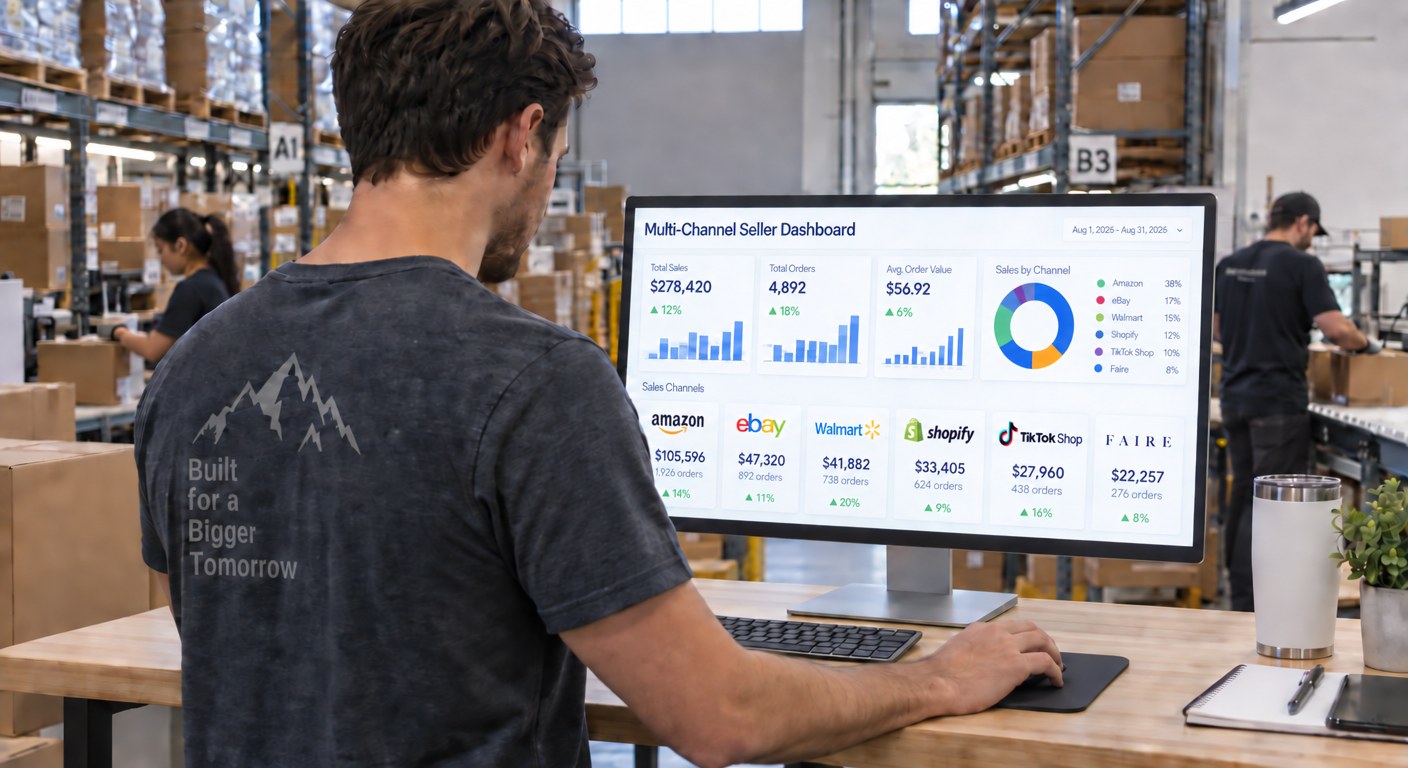
Crafting Your Multi-Channel E-Commerce Platform Strategy
Shopify, Amazon, eBay, Walmart, TikTok Shop, Wayfair and Faire ask different things of your operation. How to pick channels by fit and stage instead of by size.

Amazon Squeezing Sellers: Two Federal Lawsuits and a Decade of Fees
Amazon faces two federal cases, a 2023 antitrust trial and a 2026 suit alleging rigged ad auctions. What a decade of rising fees means for sellers.
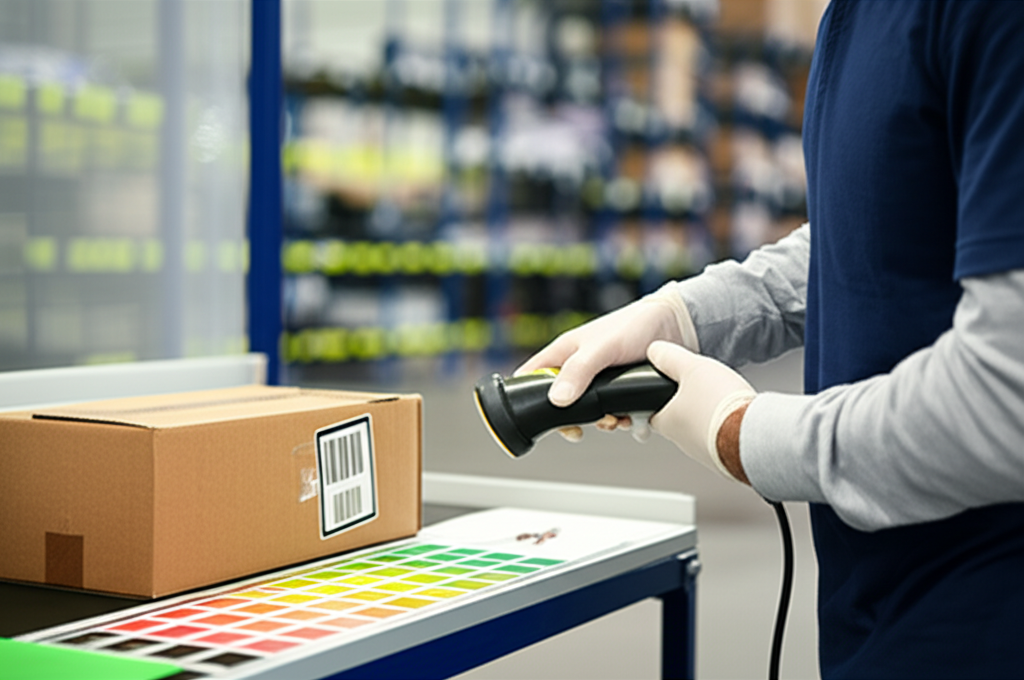
Amazon Removals and Product Remediation: What Happens After the Inventory Comes Back
Amazon removal orders arrive in batches over up to three months. What it does to listing rank, when remediation makes sense, and how to document a manufacturer claim.
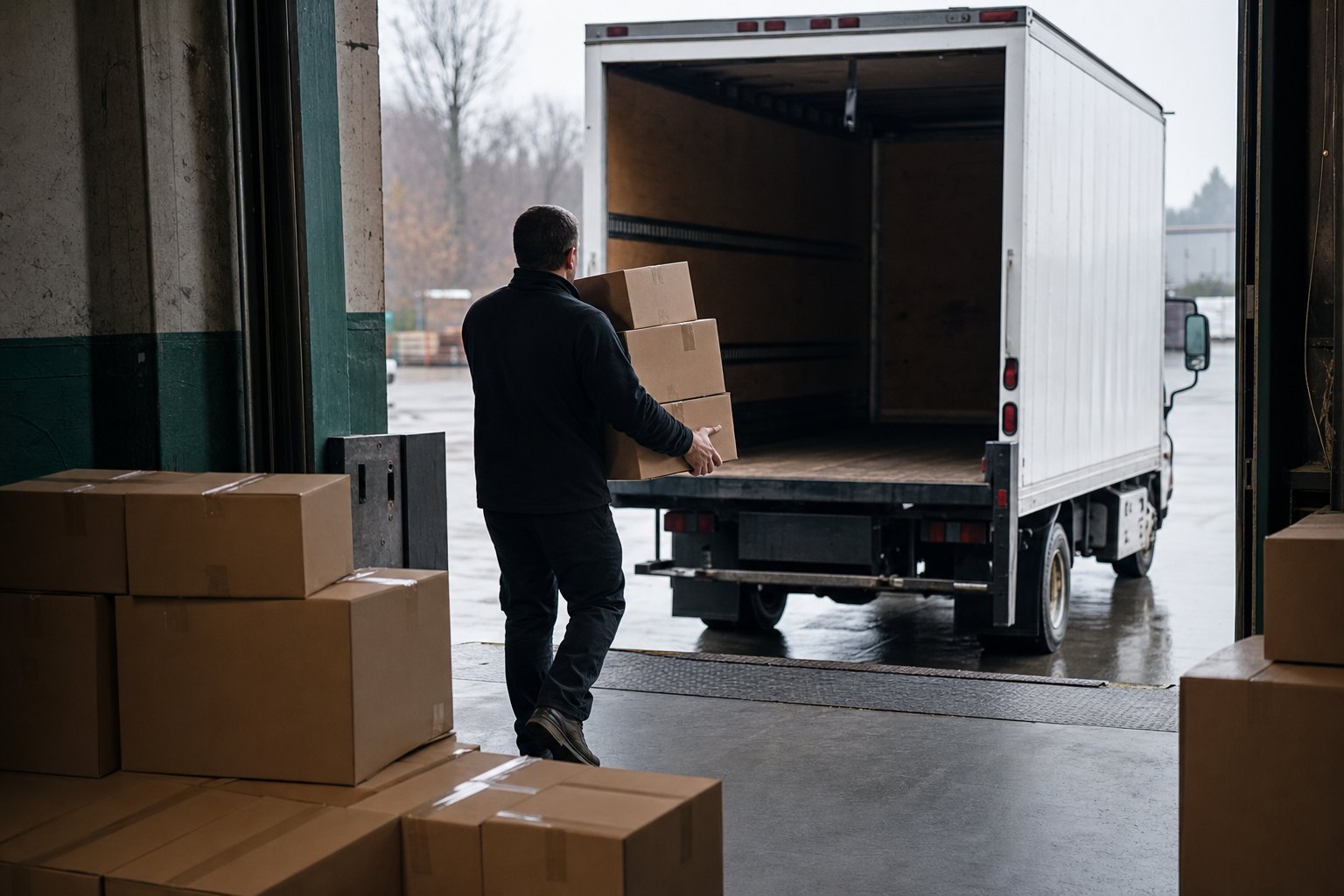
Your Carrier Didn't Scan That Package. Now What?
UPS, FedEx, and US Postal ground services do not scan packages at pickup, which leaves the handoff undocumented. Here is how manifest-based carriers close that custody gap.

Faire: The Wholesale Channel Nobody Talks About
Independent shops were ordering squishies six weeks before the press noticed. That instinct runs through a $3 billion wholesale channel, and getting onto those shelves comes down to one carton.

The Hard Part Is Not the Logistics. It Is Letting Go.
Every founder who outsources fulfillment for the first time settles the math long before they act. Something else keeps them packing boxes, and this is how to get past it.
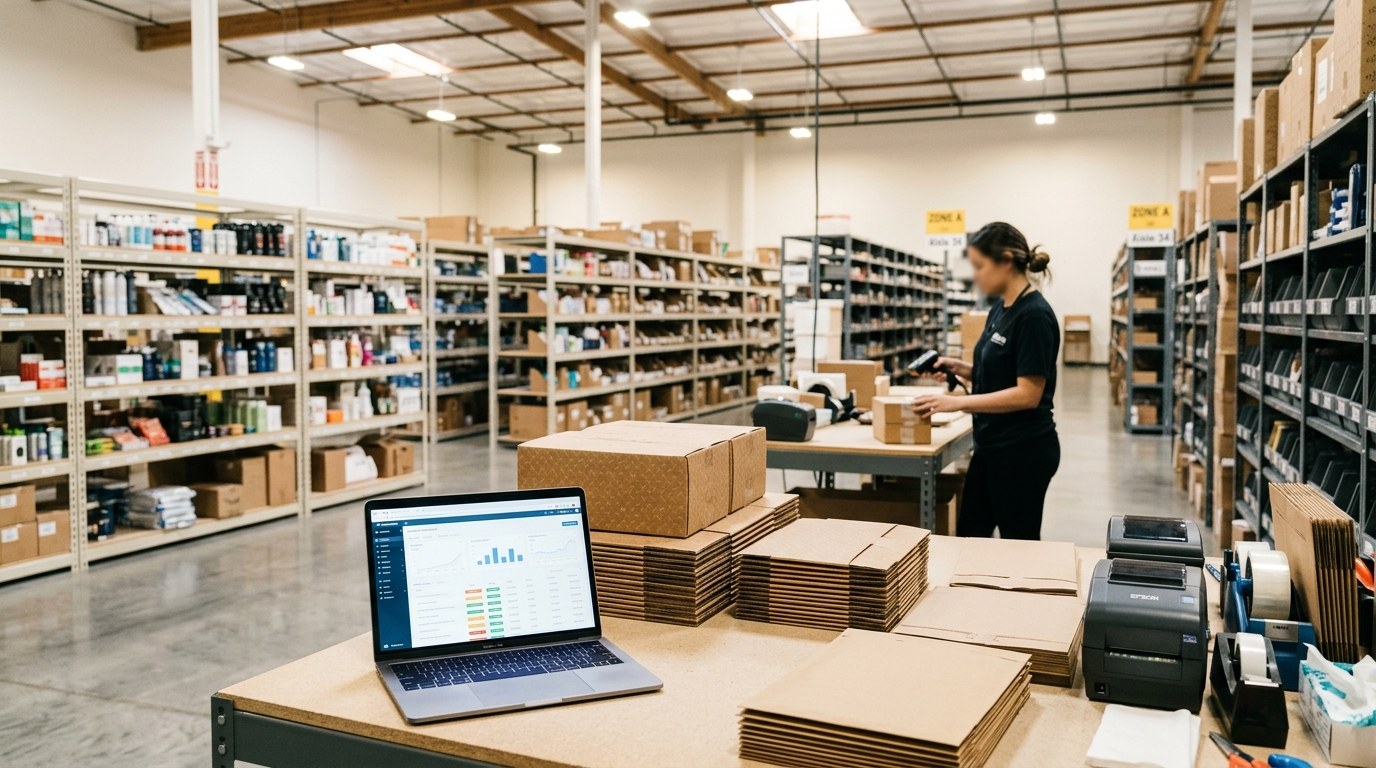
Shopify Fulfillment: How to Choose the Right 3PL
Shopify fulfillment done right means real-time inventory sync, a same-day cutoff, and a 3PL that plugs into your store natively. Here's how to choose one.

Essential Integrations for Multi-Channel Sellers: The Systems That Keep Fulfillment from Breaking
Multi-channel sellers need the right integration stack across storefronts, WMS, shipping, and returns. Here's where it breaks and what to do about it.

Kitting and Assembly Services for Ecommerce Brands: What Actually Scales
Ecommerce kitting and assembly: bundle logic, retail prep requirements, launch-kit packouts, and when outsourcing kitting to a 3PL starts making economic sense.

B2B vs DTC Fulfillment: Key Operational Differences for Ecommerce Brands
DTC fulfillment and B2B fulfillment run on different SLAs, order profiles, and labor patterns. An operator explains what multi-channel brands need from a 3PL.

How to Switch 3PLs Without Disrupting Orders: An Operator's Migration Framework
How to switch 3PLs without losing orders: the migration planning, inventory cutover, systems mapping, and carrier transition steps operators actually need.

The Last-Mile Reckoning
Legacy carriers lost 24 points of last-mile market share in five years. Who's winning, what drove the shift, and what smart ecommerce brands should do now.

What It Actually Takes to Quote International Shipping
International shipping rates aren't a simple lookup like domestic. Here's what goes into cross-border quoting: real data, HS codes, a rating engine, and DDP.

USPS Gave Themselves 10 Years to Do an 18-Month Job
The Postal Service's 10-year turnaround plan is losing $9 billion a year with no accountability. Here's what private-sector urgency looks like by comparison.

Parcel Pricing, Broken on Purpose
UPS and FedEx maintain 100+ surcharges because complexity protects carrier margins. Here's the data that proves it — and what shippers should do about it.

The Parcel Rate Sheet Problem: Why Base Rates Don't Tell You What You Need To Know
Parcel rate sheets only show base rates. Fuel surcharges and accessorials routinely add 15–25% to actual cost. What to ask before evaluating a carrier.

3PL Billing Methods Compared: Why the Rate Card Doesn't Tell the Whole Story
Same rate, different invoice. Daily proration, monthly snapshots, and anniversary billing each calculate 3PL storage costs differently — here's how and what to ask.

UPS RFID Rollout: What It Means for Package Tracking
UPS RFID rollout: what 'RFID confirmed pickup' means for tracking, the real benefits and cost, and what ecommerce brands need to know about UPS.

Amazon Overtakes USPS: What It Means for E-Commerce Sellers
Amazon now delivers more packages than the US Postal Service. Here's what this structural shift means for brands, 3PLs, and the future of e-commerce fulfillment.

The Carrier Landscape Is Shifting. Your Carrier Strategy Should Too.
Legacy carriers are losing money on small e-commerce parcels and shifting strategy. Here's what that means for brands relying on 3PL fulfillment partners.

Amazon Storage Fees vs 3PL Storage Costs in 2026: What Growing Brands Need to Compare
Amazon FBA storage fees vs 3PL storage costs in 2026. Monthly rates, aged inventory surcharges, and when to split stock between FBA and a 3PL.

Houston FBA Prep Services: Requirements, Fees, and Common Amazon Prep Mistakes
Houston FBA prep services: Amazon labeling requirements, poly-bagging, carton compliance, real prep fees, and the mistakes that trigger costly chargebacks.

How to Choose a 3PL: 20-Point Evaluation Framework for Ecommerce Brands
A 20-point framework for choosing a 3PL. Evaluate systems, inventory accuracy, onboarding, pricing transparency, and migration risk before outsourcing.

What Is a 3PL Company? Complete Guide for Ecommerce Brands
A 3PL company stores your inventory and ships your orders. What it does, when to use one, and how to evaluate fit before outsourcing fulfillment.

When to Outsource Fulfillment: The Real Inflection Points for Growing Brands
Real outsource fulfillment decision points: order strain, labor drag, founder time burn, and rising error rates. For growing ecommerce brands doing $50K–$500K/month.

3PL vs In-House Fulfillment: A Real Cost Analysis for Growing Brands
3PL vs in-house fulfillment cost analysis for brands doing $50K–$500K/month. Labor, space, software, shipping, and errors compared with real numbers.

Best 3PL Fulfillment Companies for Ecommerce 2026: An Honest Comparison
Best 3PL fulfillment companies for ecommerce brands compared. Real strengths, real weaknesses, and which partner fits your business stage and order volume.

20 Questions About 3PL, Answered by a Former $100M Seller
Straight answers to the most common questions brands ask about third-party logistics — from someone who spent $50M+ on fulfillment before starting a 3PL.

National vs. Local 3PL: Which One Actually Fits Your Brand?
National vs. local 3PL — a Houston founder breaks down the real pricing, service, and flexibility tradeoffs that most comparison guides won't tell you.

Why Foreign Sellers Need Their Own US EIN (And What Happens When They Don't)
Foreign sellers using a freight forwarder's EIN risk CBP enforcement, tax audits, and marketplace lockouts. Why getting your own US EIN is simpler than you think.

Best 3PL Fulfillment Companies in Houston: 2026 Guide
Best fulfillment companies in Houston compared: facility specs, pricing transparency, technology stack, and what actually matters when choosing a 3PL partner.

The Supreme Court Just Blew Up Tariffs. Here's What Actually Happens Next.
The Supreme Court struck down IEEPA tariffs 6-3. The pivot to Section 122 and $175B in legal limbo — an operator's take on what happens next.

How Much Does a 3PL Actually Cost? A Pricing Breakdown From the Inside
Real 3PL pricing from someone on both sides: pick and pack, storage, receiving, and the hidden fees that routinely make cheap-looking quotes expensive.

The Hardest Part About Scaling Fulfillment Operations
When orders triple, the bottleneck isn't space. Thrive's VP of Operations explains why scaling fulfillment is fundamentally about maintaining control.

The Top 5 Mistakes Brands Make When Onboarding a 3PL
Thrive 3PL's VP of Operations breaks down the most common operational pitfalls brands make when they first start working with a third-party logistics provider.

ShipBob Isn't Your Only Option
A Houston 3PL operator breaks down ShipBob's real costs, where it works, where it doesn't, and what to look for in a fulfillment partner that actually fits your brand.

Why Houston Is America's Next Great Logistics Powerhouse
Houston didn't become a logistics hub by accident. A look at the port, the economics, and the growth story behind America's most underrated shipping city.

Why Fulfillment Isn't a Strategic Function for Most Brands
Fulfillment outcomes determine your reputation. The operations behind them aren't your competitive edge — and that's exactly why a 3PL makes sense.

What 173% Growth Looks Like From the Warehouse Floor
Everyone celebrates fast growth. Nobody talks about what it does to the warehouse. A look inside what actually happens when a 3PL grows 173% in twelve months.

Amazon Isn't the Easy Button Anymore
Amazon fees now take 50-60% of seller revenue. The era of building a business on Amazon alone is over. Here is what changed and what to do next.

My Bet Is on Shopify
Amazon economics are broken and AI is making discovery possible without marketplaces. Here's why serious ecommerce brands should be building on Shopify.

What the End of the De Minimis Exemption Means for U.S. Sellers
The $800 de minimis exemption is dead. What the closure means for US brands, how cross-border competition shifts, and which sellers come out ahead.

Amazon's Chin Is Out
Amazon takes 50–70% of seller revenue, new registrations hit a decade low, and smart operators are diversifying. A veteran seller's take on what it means.